
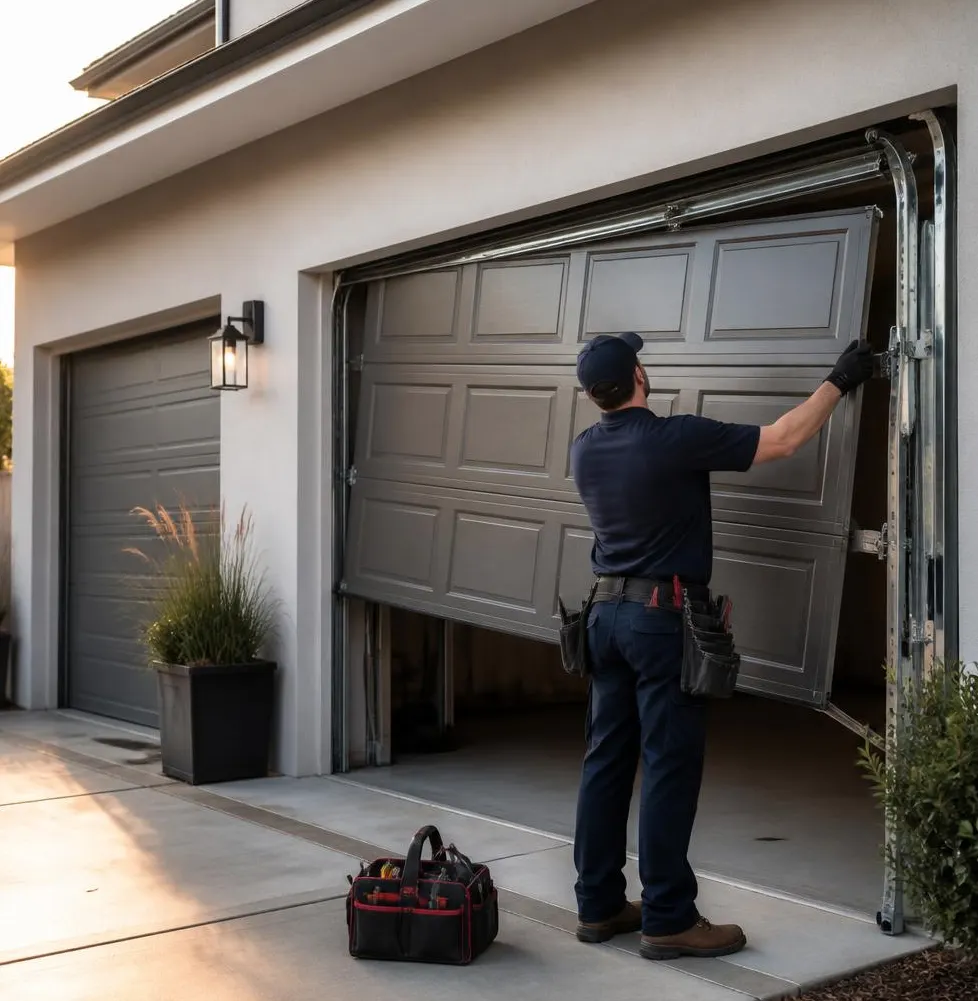
Ignore a sluggish garage door through one more cool season and you're not just living with an annoyance — you're letting a small problem turn into a big one. A door that strains against stuck rollers or gummed-up tracks forces the opener motor to work harder every single cycle. That extra load wears down gears, burns out circuit boards faster, and stretches cables that were never designed for that kind of resistance. By the time storm season rolls back around next year, a door that's been struggling all winter is far more likely to fail when you need it to seal tight against wind and rain. What starts as a slow, noisy open-and-close routine now can become a full opener replacement or an emergency spring repair later.
What a Sluggish or "Stuck" Door Actually Feels Like
Dover doesn't get hard freezes, so a door that's "frozen" here isn't dealing with literal ice. It's dealing with moisture — heavy morning dew, lingering humidity, and the occasional salt-tinged air drifting in from the coast. The symptoms still look a lot like a cold-weather sticking door:
- The door hesitates for a second or two before it starts moving, almost like it's unsticking itself.
- The opener motor sounds like it's straining, grinding, or clicking without much movement.
- The door reverses partway up or down for no clear reason.
- Movement is jerky or uneven, with the door tilting slightly as it travels.
- The door feels noticeably heavier when you try to lift it manually.
- You notice a light coating of surface rust on the tracks or hinges that wasn't there a few months ago.
None of these are things to shrug off. Each one points to a specific part of the system, and a technician will work through them in a predictable order.
Causes, Checked in the Order a Technician Would Look At Them
1. Tracks and Rollers First
This is the easiest thing to inspect and often the actual culprit. Humidity and afternoon downpours leave moisture sitting on steel tracks, and without regular wiping down, that moisture turns into surface rust — especially in homes closer to the coast where salt air accelerates the process. Rust creates friction, and friction makes the door hesitate or jerk as it travels. Nylon rollers can also absorb moisture over time, swelling slightly and binding against the track instead of rolling smoothly.
The fix: cleaning rust off the tracks, realigning any sections that have shifted, and replacing rollers that are worn, flat-spotted, or swollen. If the track itself is bent or pulled away from the frame, that's addressed as part of an off-track door repair rather than a simple cleaning.
2. Old or Contaminated Lubrication
Garage door lubricant isn't permanent. Over months of humidity and dust, it thickens, picks up grit, and turns gummy instead of slick. This is one of the most common reasons a door feels heavy or sticky even when the hardware itself is in decent shape.
The fix: stripping old residue off the rollers, hinges, and torsion springs, then applying the correct garage-door-specific lubricant (not household oil, which attracts more dust). This is standard in a routine maintenance visit and is one of the cheapest ways to prevent bigger problems.
3. Spring Tension and Balance
Torsion springs lose a small amount of tension naturally over time, and moisture-driven rust on the coils can accelerate that wear. A door with weak spring tension will feel unusually heavy to lift by hand and will make the opener work much harder than it should — which is exactly the kind of strain that leads to premature motor failure.
The fix: a balance test, where the door is disconnected from the opener and checked for how it holds position when raised halfway. If it drifts, the spring needs adjustment or full replacement. This is not a safe DIY repair given the tension involved — it's precision work handled through professional garage door spring repair.
4. Cables
If the rollers and springs check out, the cables get a close look next. Rust and moisture exposure can fray cable strands or cause them to slip off the drum, which shows up as uneven movement or a door that tilts to one side as it opens.
The fix: cable replacement and redrum, plus a check of the cable drums themselves for grooves or wear that could cause slipping again.
5. Opener Settings and Hardware
Last on the list, because it's usually a symptom of something upstream rather than the root cause. If the door is binding anywhere in the system, the opener's force settings may have been adjusted (or drifted) to compensate, which can cause the reversing behavior homeowners notice. A technician checks the limit and force settings only after confirming the mechanical parts are moving freely.
The fix: recalibrating force and limit settings, or in older units with worn gears, recommending a new opener installation rather than continuing to patch an aging motor.
When to Call Dover Garage Door
If your door is hesitating, sounds like it's grinding through the open cycle, or feels noticeably heavier than it used to, that's the point to call rather than wait. Dover Garage Door can run a full diagnostic covering tracks, rollers, spring balance, and cable condition, then handle whichever repair is actually needed — whether that's garage door maintenance to clear out rust and old lubricant or garage door spring repair if the tension has dropped off. Catching it now, before next year's storm season puts real demand on the door, is a lot cheaper than dealing with a full system failure later.
If your garage door has been sluggish on these cooler Dover mornings, give Dover Garage Door a call — we serve Dover, Plant City, Valrico, Brandon, Seffner, Thonotosassa, Lithia, and Riverview, and we can usually diagnose the issue the same day.